

BPC 157
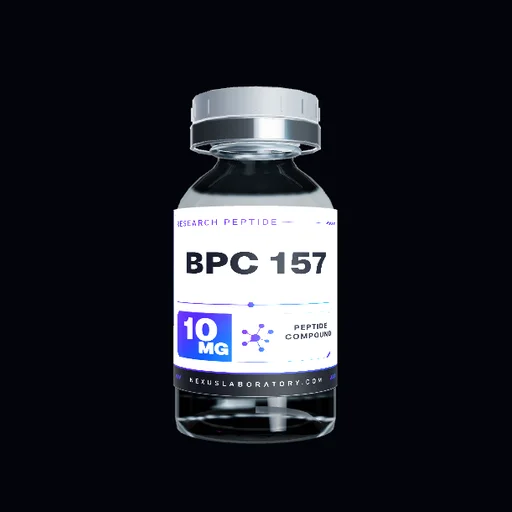
BPC 157 from the Nexus Healing & Recovery catalog, supplied for controlled in-vitro research workflows.
Ships from the US with tracking.
Catalog active: Catalog pricing is active. Live warehouse counts are not published.
- Lot-specific COA
- HPLC + MS fields
- Batch archived
For in-vitro research use only. Not for human consumption.
BPC-157 (Body Protection Compound-157) is a 15-amino acid peptide sequence derived from a protein found in human gastric juice. Research has investigated its interactions with nitric oxide (NO) pathways, growth factor modulation (including VEGF and EGF), and the FAK-paxillin signaling cascade involved in tissue remodeling studies.
No sequence is listed in the current catalog record for this product.
- CAS
- 137525-51-0
- MW
- 1419.53 g/mol
- Sequence
- Not listed
- Half-life
- Not listed
- Formula
- C62H98N16O22
- Purity
- 99.65%
- Form
- Lyophilized powder
- Class
- Gastric Pentadecapeptide
The dossier.
Compound Overview
BPC-157 (Body Protection Compound-157) is a 15-amino acid peptide sequence derived from a protein found in human gastric juice. Laboratory research has examined its interaction with nitric oxide (NO) pathways, growth factor modulation including VEGF and EGF, and the FAK-paxillin signaling cascade used in tissue remodeling studies.
Research Background & Published Literature
BPC-157 is among the better documented gastric peptides in preclinical literature. More than 100 published studies have evaluated the compound in in-vitro and animal model systems, including gastrointestinal cytoprotection models, tendon and ligament tissue research, and neurological signaling pathway investigations. Frequently cited work includes publications by Sikiric et al. in Journal of Physiology Paris and Current Pharmaceutical Design.
Researchers reviewing the literature around this compound can use the peer-reviewed resources below for additional context on mechanism of action, signaling pathways, and controlled laboratory research applications:
- Hsieh et al. (2017) — J Mol Med (Berl)
- Gwyer et al. (2019) — Cell Tissue Res
- Sikiric et al. (2025) — Pharmaceuticals (Basel)
Storage, Handling & Stability Guidelines
Use the applicable lot/source record for storage of unopened material. Any diluent selection, preparation, temperature, aliquoting, or post-reconstitution hold conditions must be established by a qualified laboratory under a validated SOP; this page does not establish a stability window.
- Keep ambient-temperature handling time as short as practical to support compound integrity.
- Reseal vials promptly after each withdrawal to reduce moisture exposure.
- Use appropriate personal protective equipment and follow institutional chemical safety protocols at all times.
- For traceability, label all aliquots with compound name, concentration, reconstitution date, and operator initials.
Quality Assurance & Lab Verification
A finalized public Certificate of Analysis is available for this catalog item. Review the public COA for the applicable lot. Lot-specific identifiers, assay values, and methods are maintained in that record and are not repeated in this product dossier.
Shipping
Orders ship within the United States via USPS; international orders are not accepted. Laboratories should follow their validated SOP together with any handling fields published for the represented product or lot; no universal prepared-solution condition is inferred here.
Compound details.
- CAS Number
- 137525-51-0
- Molecular Weight
- 1419.53 g/mol
- Molecular Formula
- C₆₂H₉₈N₁₆O₂₂
- Class
- Gastric Pentadecapeptide
Research context.
BPC-157 is one of the most widely studied gastric peptides in preclinical research. Published literature includes over 100 studies examining its effects in various in-vitro and animal model systems, with research groups investigating gastrointestinal cytoprotection, tendon and ligament tissue models, and neurological signaling pathways. Key publications include Sikiric et al. in Journal of Physiology Paris and Current Pharmaceutical Design.
Verification standard.
Certificate information is lot-specific. A finalized public record shows only the methods, fields, and results present for that named lot. A pending certificate state exposes no assay values and must not be interpreted as analytical verification. Review Nexus lab verification.
Analytical record.
- Reported HPLC purity
- 99.65%
- Retention time
- 12.00 min
- Observed mass
- 1419.50 Da
- Batch
- APX-2026-0405-B
The normalized Certificate of Analysis publishes only the lot-specific fields represented in the public record. It is not an originating laboratory report or raw instrument file.
View certificate of analysis - batch APX-2026-0405-B- Sequence
- Not listed
- Model preview
- Unavailable
Molecular model preview is unavailable for this catalog record.
The chemistry.
15-amino acid fragment of human gastric juice protein BPC (Body Protection Compound)
Technical specifications.
- Product Name: BPC-157
- Classification: Gastric Pentadecapeptide
- Structural Description: 15-amino acid fragment of human gastric juice protein BPC (Body Protection Compound)
- CAS Number: 137525-51-0
- Molecular Weight: 1419.53 g/mol
- Purity: ≥99% (verified by HPLC and Mass Spectrometry)
- Physical Form: Lyophilized (freeze-dried) powder
- Intended Use: In-vitro research use only — not for human consumption
Related research compounds
Comparable catalog records with published variants and certificate status.
- Healing & RecoveryVerified batchTB500 (Thymosin B4 Acetate)PriceFrom $30.99Formats4 sizes
Compare size options, price, and certificate status before opening the product record.
CAS 77591-33-4View product - Healing & RecoveryVerified batchBPC 5mg + TB 5mgPrice$80.99Formats1 size
Compare size options, price, and certificate status before opening the product record.
View product - Cosmetic & SkinVerified batchGHK-CUPriceFrom $37.99Formats2 sizes
Compare size options, price, and certificate status before opening the product record.
CAS 89030-95-5View product - Healing & RecoveryVerified batchKPVPriceFrom $38.99Formats2 sizes
Compare size options, price, and certificate status before opening the product record.
CAS 67727-97-3View product - Healing & RecoveryVerified batchThymosin Alpha-1PriceFrom $42.99Formats3 sizes
Compare size options, price, and certificate status before opening the product record.
CAS 62304-98-7View product
Research notes.
BPC 157 research FAQ.
What is BPC 157 used for in research?
BPC 157 is supplied for controlled in-vitro research workflows in the Healing & Recovery category. It is not labeled for human or veterinary use.
Does BPC 157 have a finalized analytical record?
BPC 157 has a finalized Nexus Lab Verified record that reports 99.65% HPLC area-percent purity for the represented batch. Other fields are shown only where present.
Which BPC 157 variants are published?
Published Nexus variants include 2mg, 5mg, 10mg, 20mg.
Does BPC 157 include a COA?
Yes. The current Nexus record links BPC 157 to finalized batch APX-2026-0405-B.